Culture, Fandom Take Center Stage at Advertising Week New York
Top Takeaways
- Fandom and culture edge out AI on this year’s agenda.
- Authenticity may be overused, but it’s more important than ever.
- Trust is also key as brands move into fan spaces.
- Think of creator partnerships in tiers.
- Even with increased popularity, women’s sports need brand support.
Connecting With Consumers Through Culture
“We should be thinking about a fan journey rather than a marketing funnel.”
That was WPP Media U.S. CEO Nancy Hall at WPP Media’s “Culture in Motion” event held during Advertising Week New York.
Keynote speakers and panel participants at Advertising Week and related programming throughout Manhattan seemed to be onboard with the fan journey. Brands, agencies, and tech companies addressing the 20,000 attendees at AWNY pivoted from obsessing over tech to focusing on what makes consumers tick, with an emphasis on culture, fandom, sports, and content creators. Artificial Intelligence, the belle of the ball the last two years, headlined only 11 of the 500-plus sessions.
WPP Media’s event, held at The Venue on Music Row, explored how fandom is moving beyond traditional formats, helping brands think where they engage and invest as relationships with fans become more direct, curated, and experiential.
“Think about it,” said Hall during a fireside chat with UTA Music Agent and Partner Ken Fermaglich. “People don’t just love an artist or a band. They show up for them anywhere and everywhere. … They talk about pop-ups of their artists all over the world, and they create memories around music. So they feel a sense of belonging, like they’re part of something bigger, and that’s because they’re part of the fandom.”
“Fandom rewards relationships,” she added.
Fermaglich made the point that rewarding fandom is table stakes for musicians these days, as record sales have taken a back seat to touring in the business equation. That means concerts are no longer a one-night engagement. Even before a tour is announced, teams are taking a broad view of things, starting with teaser announcements, fan engagements, pre- and post-show promotion, and more. And it starts and ends with social media. “All of the content that gets created,” he said, “whether it’s artist content or whether it’s fan content, we have both. It’s all getting created and then pushed out to amplify the show.”
Touching on Hall’s point about loyalty, Fermaglich said “the VIP piece is a massive part of what the process is.” They look for experiences beyond just the concert itself, whether it be backstage tours, sound-check parties, or other activations like concert cruises.
Finding the Right Creator Match
Cruising came up as a topic in another panel at “Culture in Motion,” as actor and digital creator Josh Peck discussed prior work with Norwegian Cruise Lines and the importance of brands making the right match when reaching out to creators. “What was great was I felt they were a fan of what I do,” said Peck, not just because he fit some target demo. “I could work within their limits but still do what I do.”
Nicola Grant, Senior VP-Global Brand & Advertising, Mastercard, noted that comes into play when Mastercard works with creators. “It starts with the job to be done and depends on the talent you’re working with.” Some need to be scripted, some you give complete freedom.
Seema Keswani, Senior Director, Global Branding & Advertising at Qualcomm, added that the company, which has also worked with Peck on past campaigns, bases its creator relationships on the marketing tier they’re working with. It uses large influencers for broader branding campaigns, day-to-day users talking about fairly technical products, and then the community enthusiasts who “become advocates for the tech.” Particularly when dealing with enthusiasts, the company tries to avoid overly scripting things. “What’s the point of doing it that way?” she asked. “Just go make an ad.”
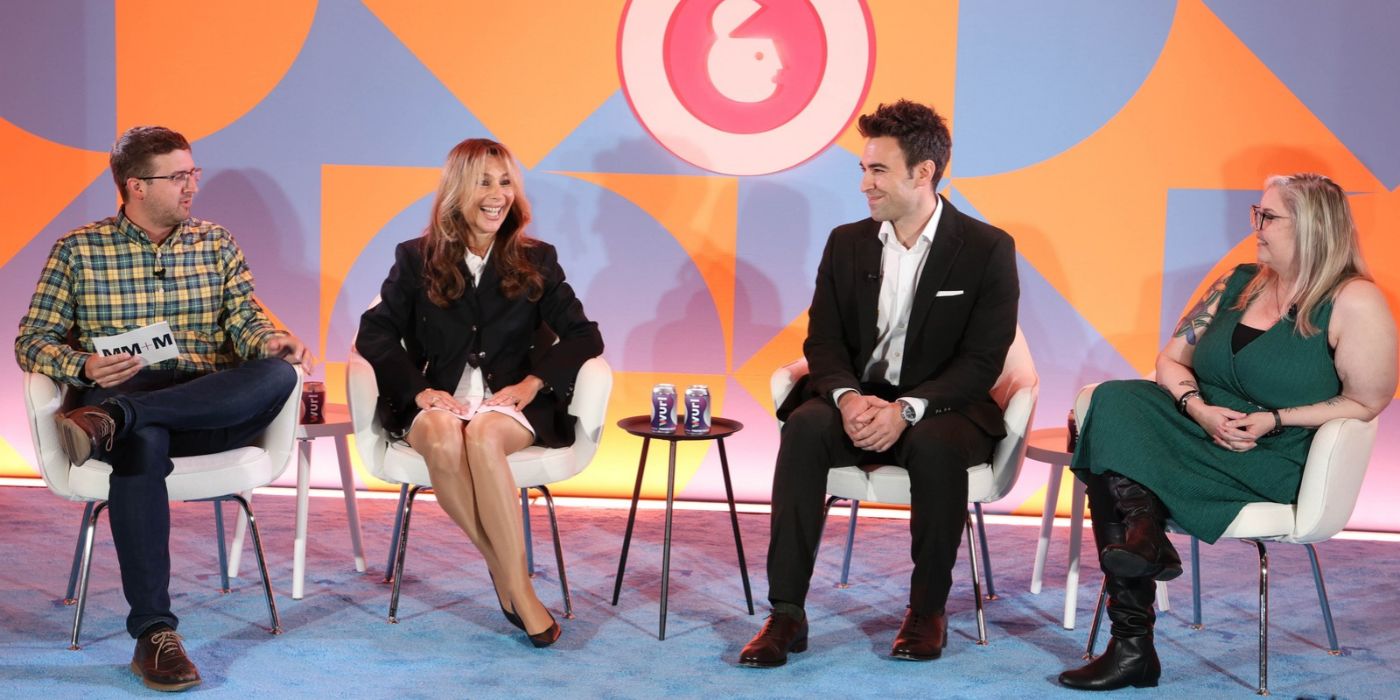
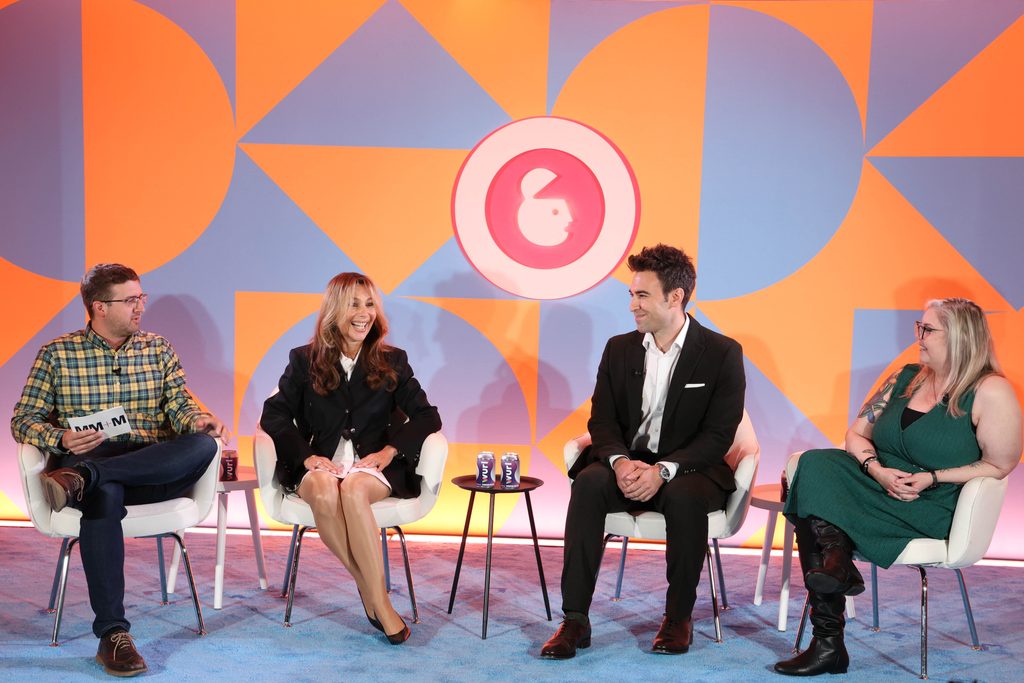
From left to right: Carly Kuper, SVP, Communications, CMI Media Group, a WPP Company; David Rosenberg, Co-Founder & Chief Comedy Officer, Crowdwork Creative; Erin Echter, Enterprise Lead for Patient and Caregiver Marketing, Genentech; George Civeris, Comedian, iHeartPodcast Host, StraightioLab, iHeartMedia.
The ‘A’ Word Isn’t Going Away
The key to partnerships with creators of all stripes is keeping it real. Brands and agencies, said Denise Ocasio, Executive Director-Head of Investment at WPP Media, “want to maintain authenticity whoever we partner with.”
And authenticity doesn’t have to mean one single thing, according Nikki and Brie Bella. The WWE Hall of Famers, reality-show stars, and entrepreneurs joined Ocasio on stage to talk about the crossroads of sports, entertainment, and marketing.
For example, the duo used a NASCAR sponsorship to promote their Bonita Bonita wine brand. You can have “Parisian vibes” but also be “Hooters girls, wrestlers, and NASCAR fans,” said Nikki.
According to Brie, prior to their reality shows Total Divas and Total Bellas, “everyone just assumed female wrestlers were just like the men. No. We like to dress up, have fun, and then go into the ring and beat up some girls.”
Those reality shows proved to WWE CEO Vince McMahon that women actually sell tickets and dramatically changed the fan base as well as the programming.
It also proved to brands that the twins, who now host The Nikki and Brie Show on SiriusXM, were bankable.
When it comes to working with brand partners, they like to bring “extra value” and “go above and beyond,” said Brie.
“That’s how athletes are,” added Nikki. “We are so competitive.”
Fittingly, the “Culture in Motion” event ended with a bit of community and fandom. Rock and Roll Hall of Famer Flavor Fav was on hand to lead a karaoke session with attendees.
Still Plenty of Brand Opportunity in Women’s Sports
Flavor Flav wasn’t at Advertising Week just to party. He and manager Rhiannon Rae Ellis were on a panel on Advertising Week’s Great Minds Stage to talk about women’s sports and specifically SHE Weekend.
“I am a girl dad. I got four daughters,” said Flav, who sponsors the U.S. Women’s Olympic Water Polo Team and the U.S. Women’s Olympic Bobsled & Skeleton teams. So he wasn’t thrilled after both U.S. hockey teams won gold at this year’s Winter Olympics and the men seemed to get all the recognition.
“The men were celebrated but the women weren’t,” he said. “I said you know what, we’re gonna bring you guys out to Vegas and celebrate your gold win.”
So he and Ellis launched SHE Weekend, a festival in Las Vegas that celebrated women Olympians.
“An unexpected partnership, it’s going to get attention. It gets your foot in the door,” said Ellis. “For SHE Weekend, it was the unexpected attention of, ‘Hey, you know what, hockey team? Come to Vegas. I’m going to host you for some dinners, concerts, fun.’”
But what seemed like such a brand layup didn’t come easily.
“Was it hard to get sponsors to come on?” asked Ellis. “Hard’s an understatement. … It started with a viral social media post, and every brand commented, ‘We’re in.’ … But the amount of no’s that we got, probably 99% from companies. The ones that did says yes are thrilled with the partnership. They’re begging us, what are you doing next?” SHE Weekend generated 1.45 billion impressions. “Those brands that took a risk, they got rewarded.”
“I felt amazed. I felt proud. I’m still blown away from it,” said Flav.
Ellis and Flav made a couple of announcements about SHE Weekend from the Advertising Week stage. They named Olympic Gold Medalist Elana Meyers Taylor, who was on the panel, as Chief Athlete Officer of SHE Weekend and said that going forward the weekend would celebrate every women’s team that wins a championship.
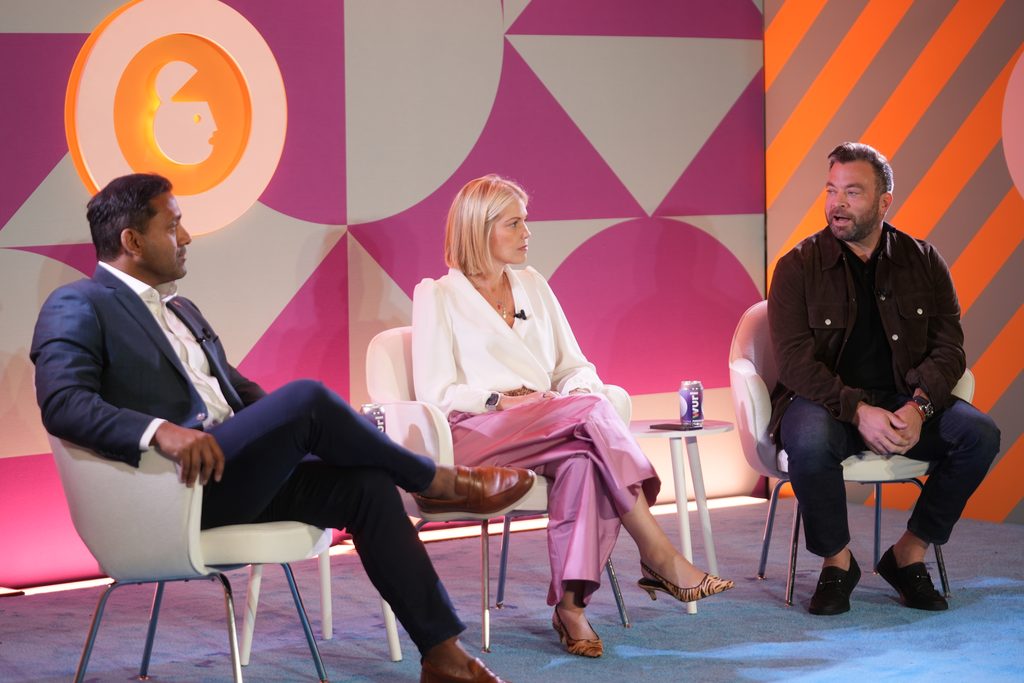
From left to right: Aden Zaman, CCO, Samba; Kristy Quagliariello, Vice President, Programmatic Media, Klick; Mark Pappas
EVP, Innovation, CMI Media Group, a WPP Company.
Grounding Sports in Business Wins
Adobe is one marketer investing in women’s sports. Speaking on a different panel, Meredith Batcheller, Head of Global Sports Marketing, Adobe, said that it’s “tapping into almost a latent fan audience that people were ignoring.” The company’s sports investments are “all grounded in business wins. How can we leverage these big contracts with awesome opportunities through tentpole events, through media integrations, through on-site activations, through co-created content? How do we leverage all of these assets in support of our broader brand goals?”
According to Marty Blich, Executive Director, US Head of Sports Partnerships and Investment, WPP Media, “The rise of women’s sports required not just a specific sports strategy but one laddered back into your overall strategy. The rise of athletes as creators changed how we had to plan, … how you engage with consumers of sports seven days a week. … You have to have a creative strategy, a media strategy, and then you also have to have a partnership strategy. And that partnership strategy can’t be something … you used to do 10, 15 years ago, and just slap logos in stadiums or on desks. You actually have to have engagement.”
At yet another panel about sports, Angela Steele, Chief Client Officer, WPP Media U.S., took it one step farther, saying that brands have to add value. “We know the way people consume content and sports is very different. They’re not just watching, they’re participating. … Brands have to shift from just being visible and showing up to creating value and being valued by these brands.” As an example, Steele highlighted Ally’s 50/50 pledge to bring parity in investments in women and men’s sports as well as its work with the National Women’s Soccer League.
Wes Harris, Director, Connected TV GTM, YouTube, speaking on the same panel, noted that there’s no shortage of content: “The fans have gotten so much more voracious… They’re more vocal. They want more content. More angles. More behind the scenes. … There’s a bottomless appetite.”
“So how do you make your brand relevant? What do you do?” asked Steele. “As a brand, just start building that muscle. It doesn’t have to be perfect and massive out of the gate… You gradually start to figure it out and get better and better.”
Choose Your Words Carefully
Tapping into fandoms and communities is clearly a powerful approach for brands. And earning entry via content creators is one of the best ways to do that.
As Bryce Adams, U.S. Influencer Lead for WPP Media, said on one panel, “There are a lot of places people are going to be informed about content, be informed about brands. … Creator marketing, influencer marketing, content made by people performs best because people trust people. Someone asked me, “If media was a party, where should brands want to be?” And I was like, “The after party, which is the group chat, because that’s where you’re really digging into getting really good recommendations.”
But first brands need to be able to speak the language. And in a panel aptly titled “Words Matter,” they grappled with how much word choice and tone matter in marketing, in particular when approaching sensitive topics. They dove deep into individual words and phrases, as well as sharing how to do better when making word choices.
Dr. Susan Dorfman, President-CEO of CMI Media Group, said that the word “journey,” despite its prevalence in marketing speak, “absolutely makes me cringe.” Journey, she said, implies a fun adventure. “When you’re sick … when you first get diagnoses and when you go through all the different stages of what you have to deal with, it is anything but a journey.”
Patient advocate and writer Kerry Wong suggested a phrase she recently heard: “diagnostic odyssey.” This works not only because it’s more accurate to the complex experience, but because the popular movie made this word more accessible to all.
Dorfman said that even with the constrictions placed on pharmaceutical marketing, “Talking to someone’s heart as opposed to someone’s brain really helps create positive impact.”
Marc Minassian, Head of Media and Innovation, Genentech, who drew from his literature studies at Cambridge for the panel, agreed: “One of the flaws that we kind of fall into it in pharmaceutical and healthcare marketing, we think that the most important thing to communicate is the efficacy of the product … when in reality if you just spoke about the lived experience … that can be so much more impactful to a person.”
Speaking on a different panel that explored word choices, but from the perspective of when and how to infuse humor into marketing, Erin Echter, Enterprise Lead for Patient and Caregiver Marketing at Genentech, noted that brands have “been cautious for very good reasons. The stakes are high,” adding that the question companies have to ask is “Has my audience given me permission to go there?” She related Genentech’s experience working with Damon Wayans on the company’s “All Eyes on DME” campaign. Lessons included listening to the audience to “read the room,” easing in, having a lot of patience and working with experts who understand the elements of comedy. “The patient is never the punchline,” she said. “The humanity and craziness around what’s happening is what you can make light of.
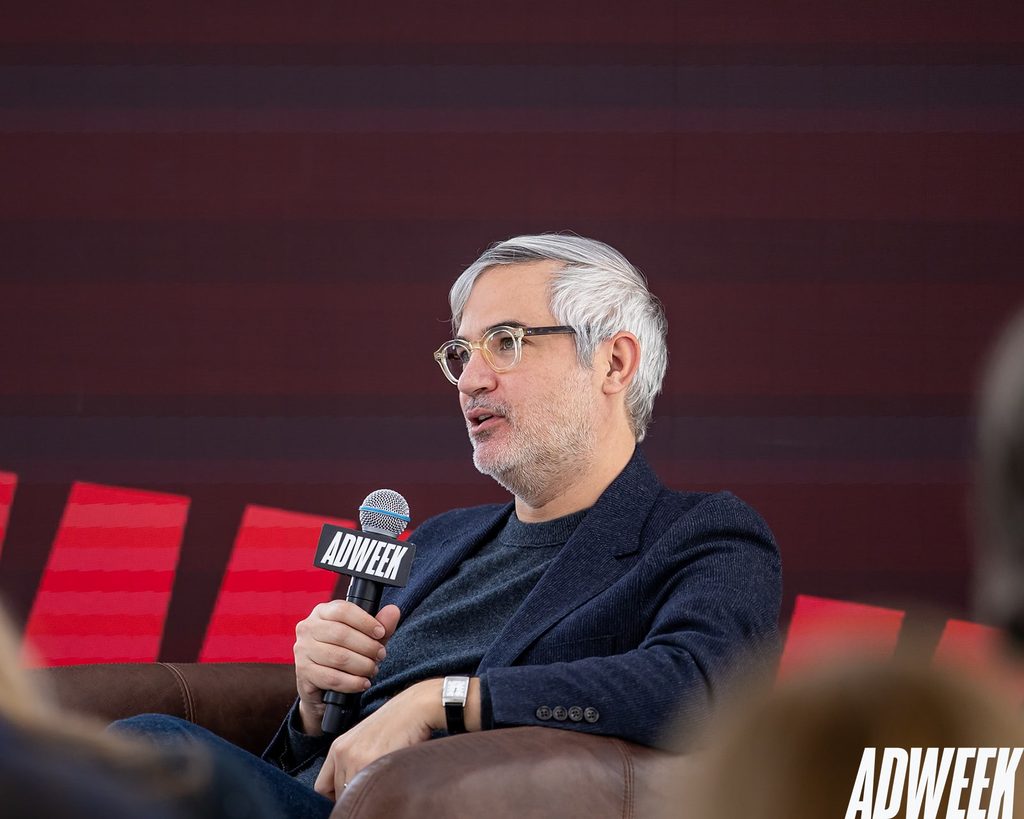
Jose Ferreira, Chief Product Officer, CMI Media Group. Photo Credit: Ivan Piedra Photography.
Trust and Measurement
A critical part of getting those words right is earning consumers’ trust. But earning that trust can be tricky.
At a Brand Innovators panel titled “Creating Cultural Connections Through Fandom” speakers emphasized that brands can’t force their way into fandom — they have to earn an invitation.
Emily Rutt, Manager, Social Media & Audience Strategy at Mazda North America, likened it to showing up as being invited to a dinner party. You don’t just barge into conversations or take over the playlist. You listen to the conversations and look for ways to add value. Put another way, at any given moment, you should be able to ask your teams – what are the relevant communities talking about this week, what are their pain points?
But listening shouldn’t necessarily turn into trend chasing, said Mastercard Global Brand Director Victor Araujo. Sometimes, “we need to create the moment if want to be in the moment,” he said.
Listening will also be crucial to breaking through the “invisible layer” of agentic AI. Speaking on a panel about AI and Gen Alpha, Channan Sawhney AVP, Digital, Media and Measurement at Church & Dwight, said that into order to “convince the invisible layer to let you through to who’s on the other side … you have to truly listen to how Gen Alpha speak, the terms they use, the phrases they would probably type.”
Smart brands get it, said Allison McDuffee, Global Head of Brand Insights and Measurement, Roblox, speaking on an Advertising Week panel: “When our clients and our different brands come to the platform, I’ll say they’re probably not necessarily looking for trust right out of the gate. They’re just looking for acceptance, and they want to come on and say, ‘OK. I just want to make sure that I’m not cringey and I am accepted, and people feel that I deserve to be here.’”
McDuffee brought up another aspect of the “trust” issue: how to measure it. “My world is a little bit art and science,” she said, “and so I am always really trying to strive for the metrics that ultimately the CFO will sign off on and get reinvestment for the CMO. … The CFO still does need to understand that trust is something that is built over time. It doesn’t happen out the gate, and it doesn’t cause someone to spend immediately.”
It can be quantifiable, said Brad Backenstose, President, Clients, WPP Media. “Across a wide group of clients, trust is something that plays into every brand’s journey and it’s a brand KPI.” He added: “We have a purchase journey study that we’ve been doing for over 20 years. Millions of purchase journeys have been studied. … We’ve been able to show how trust shows up across the journey, and we can model that though agent-based modeling to show that if our trust score improves … it’s actually going to lead to an improvement in conversion, an improvement in retention.”
Panel moderator Sam Palmer, President, Chase Media Solutions, suggested it also comes down to leadership. “When we go into that room and everything is measure with an attribution model, and ROAS, etc., etc., we as leaders need to show courage and say, ‘Yes, but we all know that these metrics are showing only a part of the world and I’m going to step in over here and actually drive and put my career and my voice on the line to say that this is what we’re going to do for the long-term benefit, even thought it might not necessarily be represented in the immediate measurements.’”
What It All Means for Brands
- Replace the marketing funnel with a fan journey. Consumer relationships are continuous, moving across platforms, experiences, communities, and everyday routines.
- Fandom is built on belonging. People support artists, athletes, and creators because participation makes them feel part of something larger than themselves.
- Treat live events as extended experiences. Teasers, social content, fan engagement, VIP access, and post-event storytelling can make an event much bigger than a single moment.
- Choose creators for fit, not just reach. The strongest partnerships begin with genuine alignment between the brand, the creator, the assignment, and the audience.
- Authenticity can be multidimensional. Consumers and creators have multiple interests and identities, so brands should not force them into narrow or overly polished personas.
- Women’s sports remain a major growth opportunity. The audience is strong, but brands must move beyond passive sponsorship and create meaningful, integrated engagement.
- Words matter. Take time to make sure what your brand is saying relates to the audience, and is empowering rather than triggering – especially in sensitive or highly regulated industries. In this case, overthinking is a positive quality.
- Brands must earn entry into communities. Like a guest at a dinner party, a brand should listen first, understand the conversation, and find a useful way to contribute.
- Trust is a long-term business asset. It may not produce an immediate sale, but it can improve acceptance, conversion, retention, and long-term brand value.
Connect with CMI Media Group on LinkedIn.
For latest news and updates, follow us on Instagram, LinkedIn, and Facebook.
Questions? Thoughts? Ideas? Contact us.